Global Container Market Navigates Middle East Conflict, Geopolitical Uncertainty, and Tariff Pressures Amid Shifting Demand Dynamics

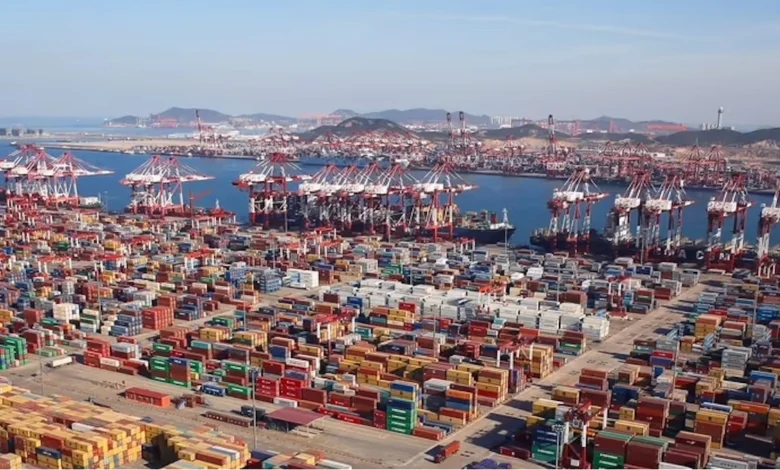
The global container shipping market, typically entering a period of post-peak season calm, is currently anything but tranquil, grappling with the escalating conflict in the Middle East, persistent geopolitical uncertainties, and potential tariff pressures that may soften ahead of upcoming midterm elections. This confluence of factors creates a volatile environment, challenging the delicate balance of supply and demand across vital trade lanes and impacting global supply chains.
Geopolitical Turmoil Engulfs Critical Maritime Choke Points
The primary driver of current market instability stems from the Middle East, where a "hot war" has intensified, directly threatening crucial maritime passages. For the week ending July 17, the benchmark Asia-U.S. West Coast route saw ocean rates fall by 6% to $7,067 per forty-foot equivalent unit (FEU), according to the Baltic Index compiled by Freightos (NASDAQ: CRGO). Asia-U.S. East Coast prices remained unchanged at $9,102 per FEU, suggesting a nuanced market response to the multifaceted pressures.
Freightos Analyst Judah Levine highlighted the severity of the regional conflict, noting, "The U.S. and Iran have traded strikes for 10 days straight, with Iranian actions also targeting neighbor states and area vessels, and missile attacks reaching as far as US positions in Jordan," where American forces suffered casualties. The immediate consequence for shipping has been a significant disruption to traffic through the Strait of Hormuz, which has "again slowed to a trickle." Alarmingly, the conflict has now broadened its scope, extending to the Bab el-Mandab strait at the southern end of the Red Sea, a development that carries profound implications for global trade.
The Strait of Hormuz, a narrow waterway between the Persian Gulf and the Gulf of Oman, is one of the world’s most strategically important choke points. Approximately 20% of the world’s total petroleum consumption, and a third of the world’s liquefied natural gas (LNG), passes through this strait daily. Any significant disruption here sends immediate shockwaves through global energy markets. Similarly, the Bab el-Mandab strait, connecting the Red Sea to the Gulf of Aden and the Arabian Sea, is crucial for vessels transiting the Suez Canal, serving as a gateway for trade between Asia and Europe. The intertwining of these two critical maritime passages in an active conflict zone presents an unprecedented challenge to the predictability and cost-effectiveness of global shipping.
Escalating Regional Conflict and Shipping Blockades
The fragility of regional stability was further underscored by a recent challenge to the 2022 ceasefire between Saudi Arabia and Yemen-based Houthi rebels. The Saudis reportedly targeted Sanaa’s capital airport, preventing an Iranian flight from landing. In retaliation, the Houthis declared the Red Sea closed to Saudi-linked vessels and ships calling at Saudi ports. While the practical enforcement of such a blockade remained unclear, its psychological and operational impact was immediate. GPS data revealed that "a number of feeder vessels headed in the area were observed … altering their voyages after the Houthi announcement."
This potential Houthi blockade has far-reaching consequences. Analyst Lars Jensen pointed out that it "could have a significant impact on container shipping supply/demand globally if Asia-Saudi cargo now has to be shipped around Africa," a re-routing that would dramatically increase transit times, fuel consumption, and operational costs. Such a diversion would place "substantial demand pressure" on Asia-Mediterranean services, as vessels would be forced to navigate thousands of extra nautical miles, reducing effective capacity on these routes. The implications extend beyond direct trade with Saudi Arabia; any vessel perceived as having a link to Saudi interests could be targeted, forcing a wider segment of shipping to consider longer, more expensive alternative routes around the Cape of Good Hope. This ripple effect could strain global vessel availability and further inflate shipping costs across multiple trade lanes.
Major carriers like Maersk (OTC: AMKBY) and CMA CGM, which had recently announced plans to resume scheduled services through the Red Sea, including calls at Saudi Arabia, may be forced to reconsider or alter these plans. The prospect of renewed and heightened risk in the region introduces an unacceptable level of uncertainty for these global shipping giants, potentially leading to further service suspensions or rerouting, exacerbating the logistical challenges.
Oil Market Volatility and Interconnectedness
Compounding the shipping industry’s woes is the resurgence of volatility in global crude oil markets. Levine noted that global crude oil prices have surged by 20% since an early July weakening, while bunker prices (marine fuel) have risen by 12%, effectively erasing over a month of prior declines. This upward trajectory in fuel costs directly impacts carrier operating expenses, threatening to offset any marginal gains from easing container rates.
Interestingly, Saudi Arabia has proactively sought to mitigate its exposure to the Strait of Hormuz, diverting "a significant share of pre-war oil flows away from the Strait of Hormuz via pipelines reaching Jeddah port in the Red Sea," Levine stated. From Jeddah, these volumes continue their journey eastward via tankers, passing Yemen. While this strategy diversifies Saudi oil export routes, it also highlights the inherent vulnerability of Middle Eastern energy infrastructure to regional conflicts.
Adding another layer of complexity is a "wild card" in the form of potential US trade policy shifts. President Trump announced 50% tariffs on Canada, leading some analysts to speculate about potential Canadian retaliation, specifically targeting crude oil exports. Such a move could have a significant impact on American consumers, potentially raising prices at the pump. US refineries are largely configured to process Canada’s heavy crude, and a disruption in this supply would necessitate costly adjustments or reliance on more expensive alternative sources, unlike the light sweet crude extracted in West Texas. This scenario underscores the interconnectedness of energy markets, trade policy, and consumer prices, where geopolitical decisions in one region can have unexpected economic consequences globally.
Container Rate Dynamics Amid Rising Costs
Despite the mounting fuel costs and geopolitical risks, Levine observed a counterintuitive trend: "But even with fuel prices rising, container rates are easing — slightly — for the first time since April, as carriers add capacity to some lanes and an early unwind from an early peak season begins." Spot rates experienced a modest decline across major east-west lanes, with Asia-North America East Coast prices holding steady, remarkably defying significant general rate increases (GRIs) and peak season surcharges that were slated to take effect on July 15.
The daily rate movements further reinforced this trend, with "West Coast and Asia-Mediterranean prices continuing to slide," Levine reported. This suggests a potential cooling of demand following a "red hot, frontloaded, June and early July" period, indicating that carriers’ projections of softening demand might now be materializing. The decision by carriers to forgo mid-month rate hikes is a strong indicator of this shift in market sentiment and demand elasticity.
This easing of rates coincides with the arrival of additional vessels that carriers had deployed to Far East hubs to accommodate the previously surging demand. The influx of new capacity, particularly noticeable on the Asia-U.S. West Coast route, helps explain the "slight discrepancy between trans-Pacific West and East Coast rates, as more vessels were added to West Coast services," according to Levine. Carriers strategically allocate capacity based on demand patterns, port efficiencies, and the competitive landscape of specific lanes. The West Coast, with its generally shorter transit times from Asia, often sees quicker responses to capacity adjustments.
Operational Headwinds: Port Congestion and Weather Disruptions
While new capacity is entering the market, its full impact on spot rates is being mitigated by persistent operational challenges, primarily port congestion in Asia. Surging volumes in previous months had already caused delays at major origin ports, and these issues have been exacerbated by adverse weather conditions, including last week’s Typhoon Bavi.
Levine elaborated on the typhoon’s disruptive force, stating that the storm "temporarily shut down several major ports, leading to serious vessel bunching in Shanghai and Ningbo, and multi-day waits in Qingdao, and delays at other ports in eastern China, Taiwan, South Korea and the Philippines." These widespread disruptions create a domino effect, leading to schedule integrity issues, missed port calls, and further delays downstream. In response, "some carriers are omitting port calls and diverting volumes to alternatives in the region, which will then move on by transshipment and also contribute to delays," Levine added. Transshipment, while offering an alternative, often adds another layer of complexity and potential for delay to the overall supply chain, as cargo needs to be transferred from one vessel to another, often at hub ports.
Trade Policy and Future Outlook
The complex interplay of market forces is further shaped by evolving trade policies. Tariffs that expired on July 24 had previously incentivized import frontloading, as businesses sought to bring goods into the country before new duties took effect. The White House has since announced new tariffs of 10%-12.5% on 60 countries linked to forced labor issues, which could be implemented in the near future. These tariffs reflect a broader global trend towards using trade policy as a tool for geopolitical and ethical objectives, rather than purely economic ones.
The outlook for anti-dumping probes remains uncertain, awaiting findings from the U.S. Trade Representative. However, speculation suggests that any tariffs resulting from these investigations might be postponed until after the U.S. midterm elections. This political calculus underscores how domestic electoral cycles can influence the timing and implementation of significant trade policies, potentially introducing further periods of uncertainty or temporary reprieves for affected industries. Businesses are thus forced to navigate not only market demand and operational hurdles but also the unpredictable currents of political decision-making, making long-term supply chain planning an increasingly complex endeavor. The cumulative effect of these tariffs, whether imminent or deferred, will undoubtedly influence sourcing strategies, manufacturing locations, and ultimately, consumer prices.
In summary, the global container market is operating in an environment of unprecedented complexity. Geopolitical conflicts in the Middle East are directly impacting vital shipping lanes, while fluctuating oil prices add cost pressures. Simultaneously, a dynamic interplay of capacity adjustments, easing demand, and persistent port congestion creates a nuanced rate environment. Overlaying these operational and market forces are evolving trade policies and the political calendar, all contributing to a period of heightened uncertainty and strategic recalibration for carriers, shippers, and consumers worldwide. The industry remains on high alert, with market participants closely monitoring developments across these interconnected spheres to adapt and navigate the turbulent waters ahead.